What CBSE means for your child
CBSE is the Central Board of Secondary Education, the national school board followed by affiliated schools across India. Narayana Vidyalayam is CBSE affiliated, with classes from Pre-Primary to XII across its campuses. CBSE conducts the board examinations at the end of Class X and Class XII.
Our teaching is rooted in Competency-Based Education (CBE) as envisioned in NEP 2020. In simple terms, the aim is that children understand and can apply what they learn, rather than only remember it.
The four stages of school
| Stage | Classes | Ages | Focus |
|---|---|---|---|
| Foundational | Pre-Primary to Class 2 | 3 to 8 years | Play, enquiry and theme-based learning |
| Preparatory | Class 3 to 5 | 8 to 11 years | Moving from play into more structured learning |
| Middle | Class 6 to 8 | 11 to 14 years | Concept-based, subject-oriented learning |
| Secondary | Class 9 to 12 | 14 to 18 years | Multidisciplinary learning and career readiness |
NEP 2020 arranges school into these four stages, often called the 5+3+3+4 structure. Our curriculum follows the same four progressive stages so that learning continues smoothly from early childhood to higher secondary.
Foundational Stage
The first five years combine three years of pre-primary with Classes 1 and 2. Learning happens through storytelling, music, art, outdoor exploration and play, and progress in Classes 1 and 2 is captured in the Holistic Progress Card.
Preparatory Stage
The Preparatory Stage builds on the play-based, discovery-driven learning of the Foundational years and moves students into more structured learning. Children begin to work more independently and build stronger skills in reading, writing and mathematics.
Middle Stage
The Middle Stage marks the move from foundational learning to concept-based, subject-oriented education. Students meet subjects in greater depth and learn to connect ideas across them.
Secondary Stage
The Secondary Stage focuses on multidisciplinary learning and career readiness, building critical thinking, analytical skills and subject mastery through the CBSE curriculum. Students are offered greater flexibility and choice in subjects so they can follow their interests and career aspirations. Learners also have the option to exit after Grade 10 and re-enter in Grades 11 and 12.
Subject combinations offered in Classes XI and XII can differ by campus. Ask the admission office of the campus you are considering.
How learning happens in class
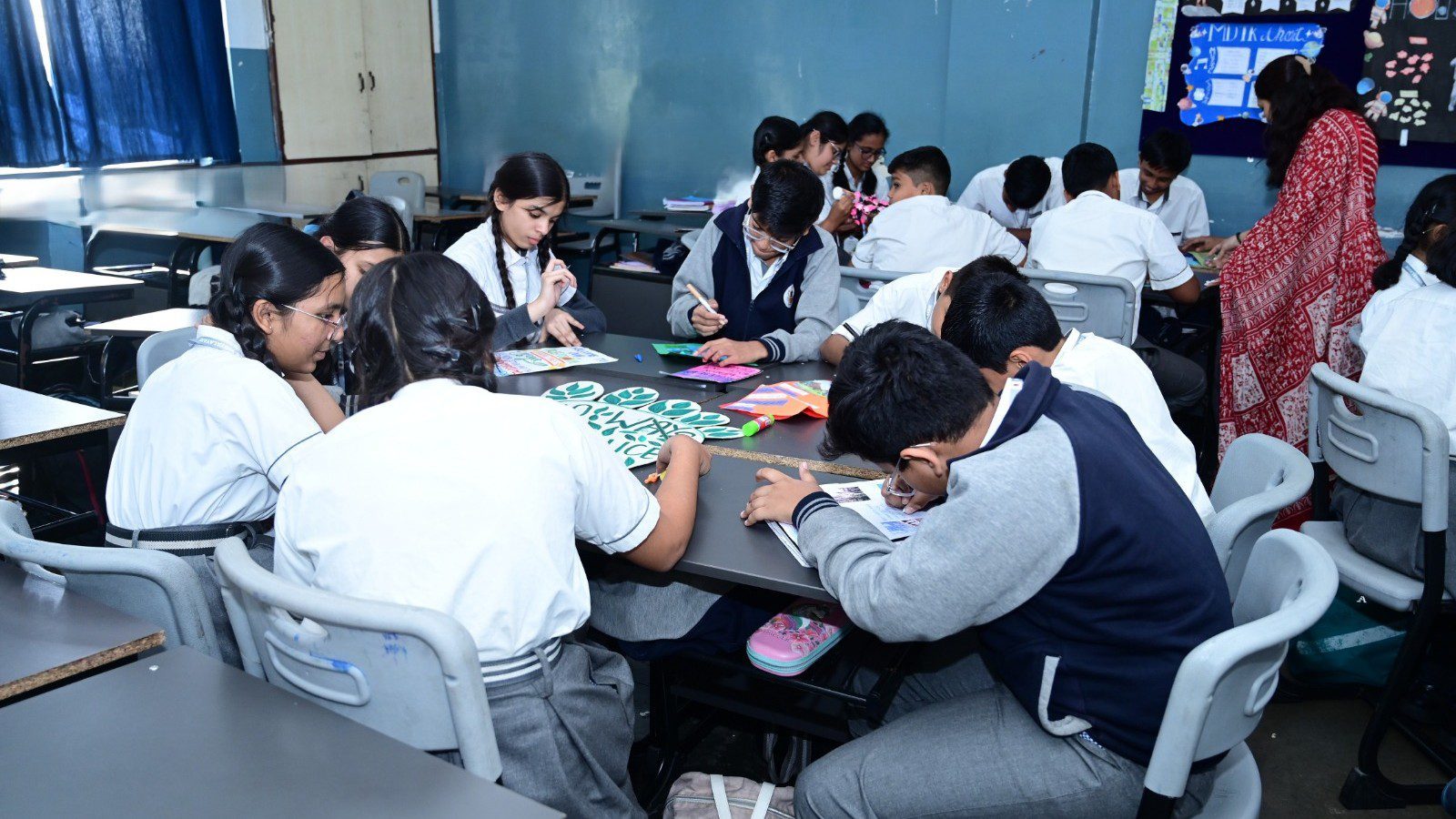
- Activity-based learning that makes concepts come alive
- Clearly defined SMART learning outcomes for measurable progress
- STEAM programs that build scientific and technological aptitude
- Science, Mathematics and Computer laboratories for hands-on work
- Smart and hybrid classrooms supported by a Learning Management System
- Libraries stocked with age-appropriate books, periodicals and reference material
A Finnish-inspired option
At the Global School on Kamptee Road, the CBSE curriculum is enriched with Finnish pedagogical practices through the OPPI Finland Global Schools program. It currently admits children from Nursery to Grade VI.